
In-depth Analysis: Mitsubishi 4D30–4D36 Series Engine & Cylinder Head Selection Guide
In-depth Analysis: Mitsubishi 4D30–4D36 Series Engine & Cylinder Head Selection Guide
In the light-duty truck, coach and construction equipment power sector, the Mitsubishi 4D30 / 4D31 / 4D32 / 4D33 / 4D34 / 4D35 / 4D36 series diesel engines are renowned as benchmarks for durability, fuel economy and easy maintenance.
As classic inline 4-cylinder diesel power units with cast iron block, gear-driven valve train and mature direct injection technology, they have maintained global popularity for decades. However, during engine overhaul or performance replacement, mis-matching naturally aspirated (NA) and turbocharged (T) cylinder heads is the most common and costly technical pitfall.
This guide breaks down the full engineering logic from power parameters, hardware upgrades to cylinder head specification matching, helping you fully master the Mitsubishi 4D30–4D36 series.
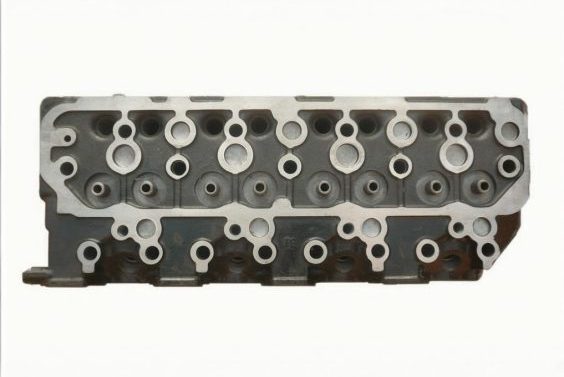
1. 4D30–4D36 Full Lineup: Power & Hardware Differences
Covering displacement from 3.3L to 3.9L, the entire 4D30–4D36 range is divided into Naturally Aspirated (NA) and Turbocharged (Turbo) versions, widely fitted on Mitsubishi Canter light trucks, Rosa buses and various construction machinery.
Core Performance Parameters
| Technical Spec | 4D30 (NA) | 4D31 (NA) | 4D32 (NA) | 4D33 (NA) | 4D34 (NA/Turbo) | 4D35 (NA) | 4D36 (NA/Turbo) |
|---|---|---|---|---|---|---|---|
| Displacement | 3298cc / 3.3L | 3.3L | 3.6L | 3.6L | 3907cc / 3.9L | 3.9L | 3907cc / 3.9L |
| Bore × Stroke | 100×105mm | 100×105mm | 102×110mm | 102×110mm | 104×115mm | 104×115mm | 104×115mm |
| Max HP (PS) | 85–95 @3200rpm | 90–98 @3300rpm | 95–100 @3400rpm | 100–105 @3400rpm | 105–110(NA) 120–130(T) @3500rpm |
105–110 @3500rpm | 100–105(NA) 120–125(T) @3500rpm |
| Max Torque (N·m) | 200–240 @1800–2000rpm | 210–250 @1900rpm | 220–260 @1900rpm | 230–270 @2000rpm | 260–280(NA) 300–320(T) @2000rpm |
270–290 @2000rpm | 260(NA) 300(T) @2000rpm |
| Compression Ratio | 18.0:1 – 20.0:1 | 18.0:1 – 19.5:1 | 17.5:1 – 19.0:1 | 17.5:1 – 18.5:1 | 17.5:1(NA) / 18.0:1(T) | 17.5:1 | 17.5:1(NA) / 18.0:1(T) |
| Valve Train | OHV Gear Drive, 8 Valves | OHV Gear Drive, 8 Valves | OHV Gear Drive, 8 Valves | OHV Gear Drive, 8 Valves | OHV Gear Drive, 8 Valves | OHV Gear Drive, 8 Valves | OHV Gear Drive, 8 Valves |
Hardware Reinforcement: NA vs Turbo
- 4D30 / 4D31 / 4D32 / 4D33 / 4D35 (NA Version)
Cast iron deep-skirt cylinder block with replaceable wet cylinder liner; flat-top or shallow-dish pistons designed for high compression ratio; no piston oil cooling nozzle, relying on block and cylinder head for natural heat dissipation; standard cast iron cylinder head with 8-valve layout without reinforced cooling passages. - 4D34T / 4D36T (Turbo Version)
Reinforced cylinder block with enlarged main and connecting rod bearings; deep-dish combustion chamber pistons equipped with piston oil cooling nozzles for forced bottom piston cooling; upgraded high-alloy cast iron cylinder head with thickened combustion chamber walls and optimized cooling passages to resist thermal cracking and high-temperature creep; reinforced valve seats to withstand extreme exhaust heat from turbocharging.
2. Cylinder Head Specification Logic: NA vs Turbo
Mitsubishi 4D30–4D36 cylinder heads are split into High Compression Ratio for NA and Low Compression Ratio for Turbo. The core difference lies in combustion chamber depth and volume, which directly determines compression ratio and anti-knock safety margin.
1. Naturally Aspirated Cylinder Head (For 4D30/31/32/33/34NA/35/36NA)
- Combustion Chamber: Shallow chamber, small volume, matched with flat-top piston
- Compression Ratio: 17.5:1 – 20.0:1
- Design Purpose: NA engines have low intake pressure; high compression ratio ensures sufficient compression terminal temperature for reliable diesel ignition, improving low-end torque and fuel efficiency.
- Material & Structure: Standard grey cast iron, 8-valve configuration.
- Common OEM Part Numbers: ME013330, MD996449
2. Turbocharged Cylinder Head (For 4D34T / 4D36T)
- Combustion Chamber: Deep chamber, larger clearance volume, matched with turbo dedicated pistons
- Compression Ratio: 18.0:1
- Design Purpose: Turbocharging raises intake pressure to 1.2–1.5bar; deeper chamber increases clearance volume to lower compression ratio, preventing engine knock, piston crown ablation and head gasket blowout.
- Material & Structure: High-alloy cast iron, enhanced thermal fatigue resistance and anti-crack performance.
- Common OEM Part Numbers: ME997800, ME013300
Quick Identification Tips
- Part Number: Standard numbers for NA; Turbo heads have exclusive suffix or dedicated part codes.
- Chamber Depth: NA ~12–14mm; Turbo ~16–18mm
- Material Marking: Turbo heads stamped with HT/alloy marks and 5–8kg heavier than NA versions.
3. Catastrophic Failures Caused by Wrong Cylinder Head Matching
Scenario 1: NA Engine Fitted with Turbo Cylinder Head
- Compression ratio drops sharply, insufficient compression temperature
- Hard cold start, heavy white smoke in low-temperature environment
- Low-speed torque loss up to 25%–35%, weak loading capacity and fuel consumption surging 20%–30%
- Incomplete combustion washes cylinder wall, accelerating piston ring and liner wear and causing oil burning.
Scenario 2: Turbo Engine Fitted with NA Cylinder Head
- Over-high compression ratio combined with boost pressure leads to extreme in-cylinder explosion pressure
- Piston-to-valve interference at TDC: bent valves, broken piston crown, bent connecting rod, even cylinder block scrapped
- Blown head gasket, coolant bubbling, oil emulsification and water-oil mixing
- Severe engine knock and overheating, resulting in piston ablation and cylinder head thermal cracking.
4. Professional Selection & Overhaul Recommendations
Pre-Disassembly Inspection
- Confirm engine model via nameplate or block number to distinguish NA / Turbo version
- Measure old cylinder head combustion chamber depth; check piston crown profile (flat / deep dish)
- Verify original OEM part number strictly; avoid generic replacement mixing.
Purchasing & Installation Guidelines
- NA Engines: Use standard cast iron shallow chamber head with compression ratio 17.5:1–20.0:1
- Turbo Engines: Must use high-alloy deep chamber head matched with piston cooling nozzles
- Cylinder head bolts: Tighten in 3–4 stages with final torque 110–130N·m, follow middle-to-end sequence to prevent head deformation
- Head flatness: Allowable tolerance ≤0.05mm; total grinding limit ≤0.2mm to avoid compression ratio deviation
- Inspect valve seats and pre-chamber inserts for tight mounting and no cracks.
Post-Assembly Testing
- Compression Pressure: NA 28–32bar; Turbo 25–28bar, cylinder deviation ≤2bar
- Cold Start Test: Smooth start within 3 seconds at -5℃ without continuous white smoke
- Road Test: Strong low-speed torque, no knocking, stable water temperature 80–95℃, no oil or coolant leakage.
5. Conclusion
The core rule for Mitsubishi 4D30–4D36 cylinder head selection is accurate matching between compression ratio and intake mode.
Naturally aspirated units rely on high compression ratio for efficient combustion; turbocharged units adopt lower compression ratio to avoid knock and thermal overload.
Never mix cylinder heads by experience alone. Always verify engine model, combustion chamber depth and OEM part number before purchase and overhaul. Correct specification matching maximizes service life and keeps these legendary industrial diesel engines running reliably for hundreds of thousands of kilometers.
We supply genuine & high-performance replacement heads for all 4D series engines. Contact us for part numbers, pricing and global shipping.
Contact Us Now: [Phone/Wechat:+8615538009081/+8619522371656]